
Neighbourhoods
Shoreditch restaurants — the best restaurants in Shoreditch, well past the hype cycle
Shoreditch's dining has outlasted the neighbourhood's own reputation for turning over every few years. The best Shoreditch restaurants — a mezzanine tasting menu, a wood-fired grill above a pub, a walled garden behind a locked door — have nothing to do with whatever the street outside is currently known for.
What Shoreditch is for
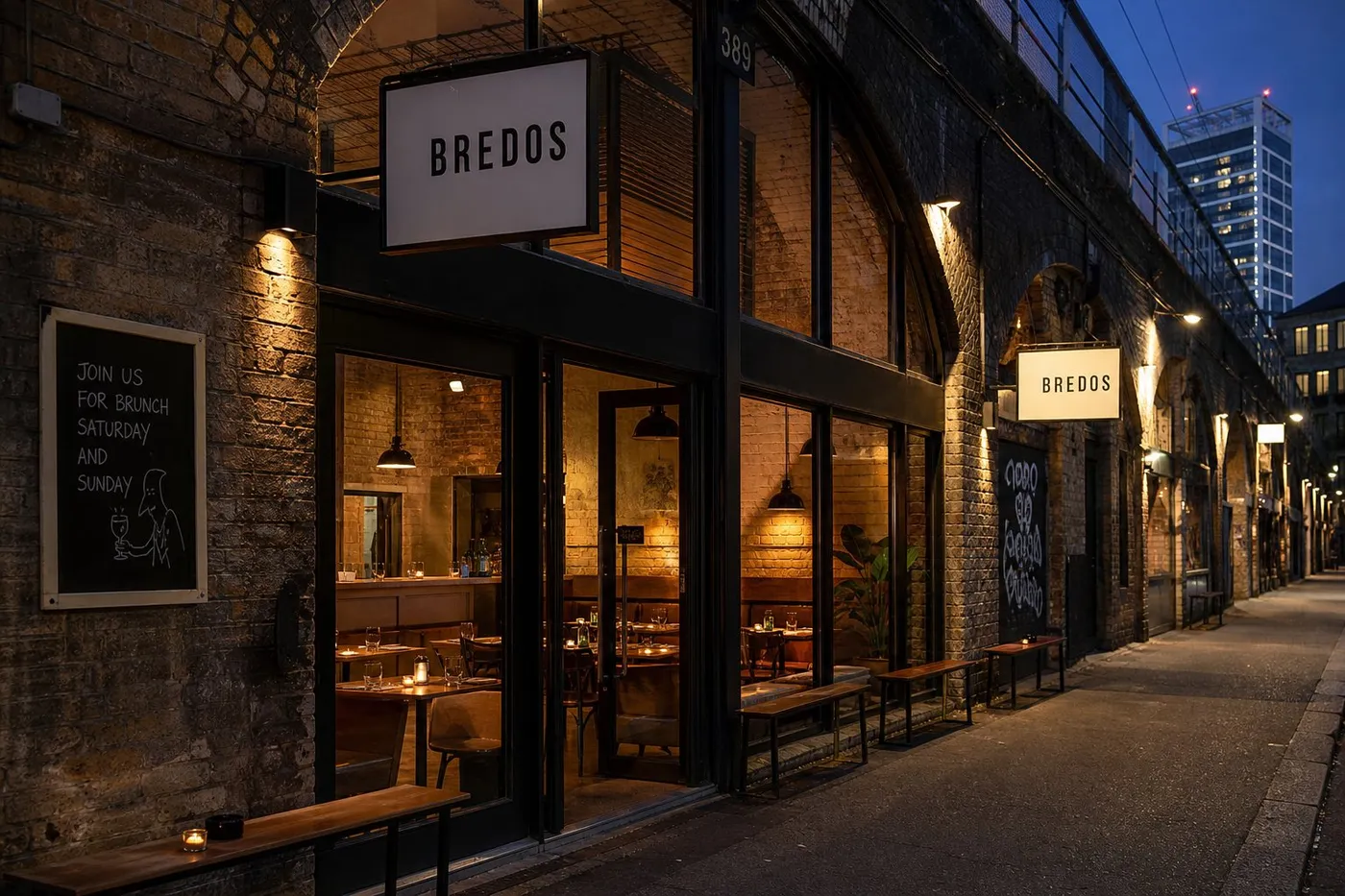
Ambitious modern British cooking in unglamorous buildings — a converted tea factory, a pub upstairs, a Victorian bike shed. The Shoreditch restaurants that last tend to be the ones in the least promising rooms.
Worth a wander
Redchurch Street after dark, and the quieter streets around Arnold Circus for the long-lunch crowd.
What to avoid
Anywhere trading purely on the neighbourhood’s old reputation rather than its own kitchen.
From print works to nightlife capital
Shoreditch’s transformation from a genuinely rough, largely industrial pocket of East London into one of the city’s best-known nightlife and dining districts happened faster than almost anywhere else in London — the shift accelerated through the 2000s and 2010s as artists, then bars, then restaurants moved into the area’s cheap warehouse and print-works spaces, drawn by exactly the kind of raw, unpolished buildings that now define the neighbourhood’s aesthetic even in its most expensive openings.
Brick Lane, on the neighbourhood’s eastern edge, adds another distinct layer — its long history as a centre of London’s Bangladeshi community gives it a genuinely different, curry-house-dominated food identity from the rest of Shoreditch.
A neighbourhood that keeps reinventing its own reputation
Shoreditch has been declared “over” by London’s media on a fairly regular cycle since at least the early 2010s, and it’s worth taking that framing with real scepticism — the neighbourhood’s actual kitchens have kept getting more serious even as its street-level reputation cycles between “essential” and “past it.” The restaurants that have lasted here tend to share one trait: they’re good enough on their own terms that they’d survive in any neighbourhood, rather than depending on Shoreditch’s own cachet to fill tables.
Getting here
Old Street (Northern line) and Shoreditch High Street (Overground) are the two main stations, with Liverpool Street a slightly further walk that also connects to the Elizabeth line. Old Street’s roundabout end of the neighbourhood skews more toward the tech-office crowd; Shoreditch High Street sits closer to the area’s dining and nightlife core.
What it costs
Shoreditch spans a genuinely wide price range — a quick counter meal near Old Street costs little more than anywhere else in London, while the neighbourhood’s best-regarded destination kitchens and cocktail bars sit at a proper premium, reflecting both ambition and the area’s now-considerable rents.
When to visit
Weeknights give a genuinely different, calmer read on Shoreditch than a Friday or Saturday — several of the neighbourhood’s best restaurants are noticeably easier to book and enjoy midweek, before the nightlife-focused crowd arrives and the later end of the neighbourhood picks up its more familiar weekend energy.
The name’s older meaning
Shoreditch’s name predates its current reputation by centuries — the area was a centre of London’s early theatre scene in the 16th century (Shakespeare himself performed at a playhouse here, The Curtain, before the more famous Globe was built south of the river) and later became one of the city’s poorest and most notorious districts through the 19th century, a history worth remembering against the neighbourhood’s current, considerably more prosperous identity.
Frequently asked questions
Is Shoreditch still worth visiting, or has it "moved on"?
The neighbourhood’s own reputation has cycled between “essential” and “past it” for over a decade, but the kitchens that have actually lasted here are good regardless of that cycle — worth judging the individual restaurant rather than the area’s current media standing.
Is Brick Lane part of Shoreditch?
It borders Shoreditch and gets grouped with it informally, but Brick Lane has its own distinct identity — a long-standing centre of London’s Bangladeshi community, with a curry-house-dominated food scene quite different from the rest of the neighbourhood.
Is Shoreditch busy every night, or just weekends?
Weekends are considerably busier, particularly for the nightlife-focused end of the neighbourhood, but the dining scene runs a genuine weeknight trade too — several of the area’s best restaurants are noticeably calmer, and easier to get into, midweek.
Which station is closest to Shoreditch's restaurant scene rather than its office district?
Shoreditch High Street on the Overground sits closest to the dining and nightlife core; Old Street’s roundabout end leans more toward the tech-office cluster, though both are within a reasonable walk of most of the neighbourhood.
Where to eat
6 restaurants-

Brat
The most exciting dinner in East London for the better part of a decade, above a Redchurch Street pub.
Basque / wood-fire -

The Clove Club
Isaac McHale's two-Michelin-starred tasting menu inside Shoreditch Town Hall — the fried chicken alone is worth the booking.
Modern British / tasting menu -

Duchy
A Phipp Street bistro cooking the France–northern-Italy borderland — quietly one of Shoreditch's better rooms since replacing Leroy.
Alpine / Savoyard-Italian -

Seed Library
Ryan Chetiyawardana's basement bar under One Hundred Shoreditch trades spectacle for genuine ingredient curiosity in every glass.
Cocktail bar -

Rochelle Canteen
Reached by pressing a buzzer on a locked green door at Arnold Circus, one of London's best long lunches.
British / seasonal -

Smoking Goat
Northern Thai 'drinking food' on Shoreditch High Street — loud, cheap by the neighbourhood's standards, and properly spiced.
Northern Thai / drinking food