
Neighbourhoods
Smithfield restaurants — serious breakfasts and nose-to-tail cooking beside the meat market
Smithfield still runs on the rhythm of its meat market — early opening hours, serious breakfasts, and a nose-to-tail cooking tradition that changed how British restaurants think about a menu. The Smithfield restaurants here keep market hours too.
What Smithfield is for
Early starts: a market-hour breakfast, a long nose-to-tail lunch, or both in the same morning. Few Smithfield restaurants are built for a late booking.
Worth a wander
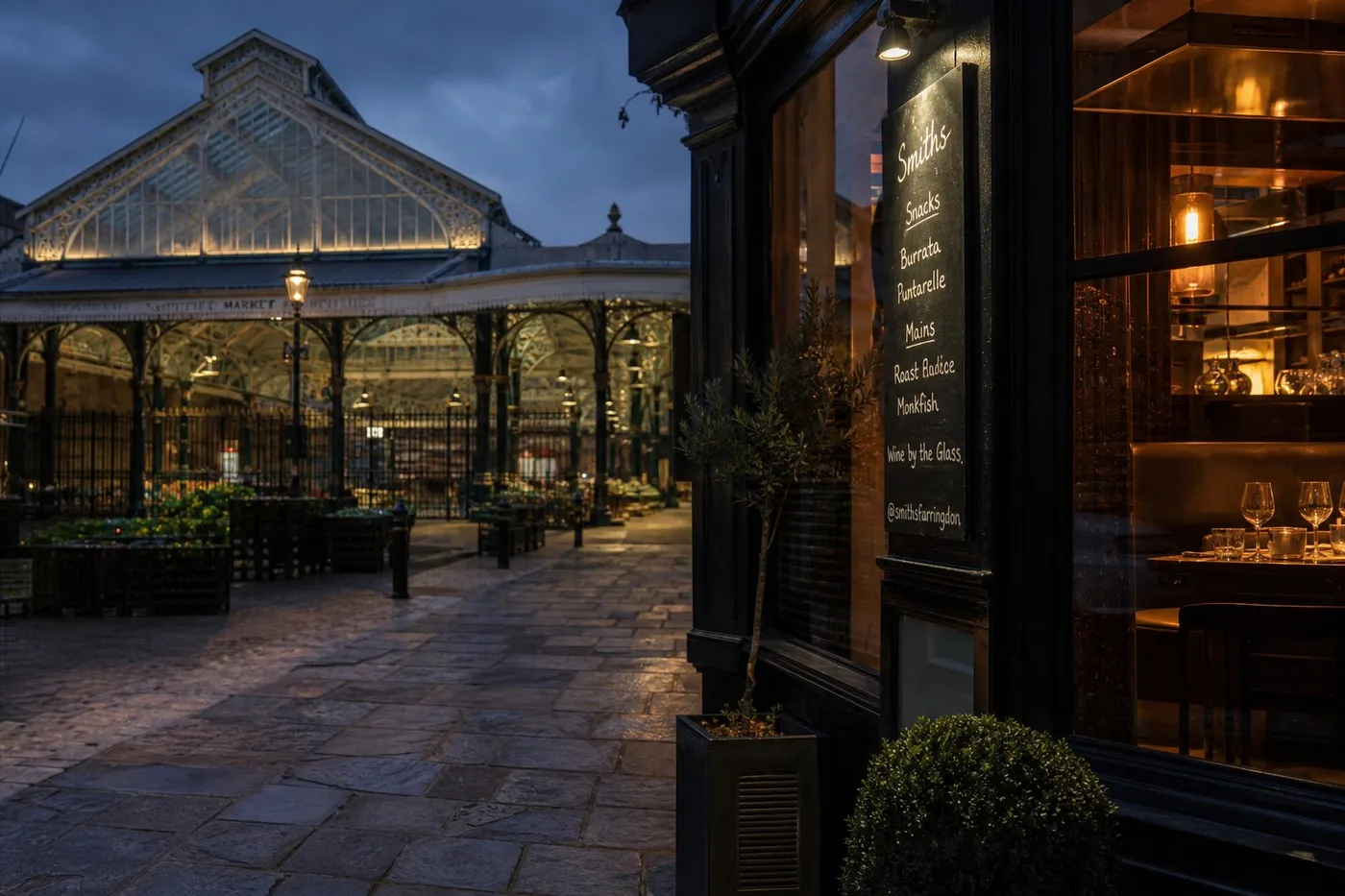
Charterhouse Street and St John Street, either side of the market itself, both lined with the kind of Victorian meat-trade architecture that gives Smithfield its distinctive look among London’s food neighbourhoods.
Nearly a thousand years of trading
Smithfield Market’s history as a livestock and meat trading site goes back to at least the 10th century, making it one of the oldest continuously-used market sites in Britain — the current cast-iron and glass market buildings date from the Victorian era, purpose-built for the wholesale meat trade that still technically operates from part of the site in the early hours, before most restaurant-goers are awake.
That working-market rhythm is the reason the neighbourhood’s restaurants keep such early hours by London standards, and why “nose-to-tail” cooking — using the whole animal rather than just prime cuts — became something of a Smithfield speciality; the market’s proximity made offal and less conventional cuts genuinely fresh and available in a way few other London neighbourhoods could match.
A City-fringe location
Smithfield sits right at the western edge of the City of London, close enough to the financial district that its restaurants have historically served a mix of market traders finishing an overnight shift and City workers on a lunch break — an unusual combination that’s shaped a dining scene built around genuinely early starts and hearty, meat-forward menus rather than a typical evening-destination rhythm.
Getting here
Farringdon station (Elizabeth line, Thameslink, Circle, Hammersmith & City, Metropolitan) is a five-minute walk from the market itself, and Barbican station on the Circle/Hammersmith & City/Metropolitan lines covers the eastern edge of the neighbourhood.
What it costs
Smithfield’s market-hour breakfasts remain some of the more reasonably priced early-morning meals in central London, a genuine legacy of serving working traders rather than tourists — the neighbourhood’s destination nose-to-tail lunches and dinners, by contrast, sit at a fuller price reflecting their reputation.
A market that survived
Smithfield came genuinely close to major redevelopment more than once over the past half-century, and the fact that the Victorian market buildings are still standing — rather than replaced with office towers, as happened to much of the surrounding City fringe — owes a lot to sustained conservation campaigns.
The market’s most recent chapter involves part of the historic site being converted into a new home for the Museum of London, a use that keeps the buildings active without requiring the meat trade itself to justify their preservation indefinitely.
When to visit
Early morning is genuinely Smithfield at its most distinctive — the market-hour breakfast trade that gives the neighbourhood its whole identity. Lunch and dinner both work well too, but arriving before 9am for once is the single best way to understand why this specific pocket of the City fringe developed the way it did.
Frequently asked questions
Is the meat market still operating at Smithfield?
A reduced version of the wholesale trade still runs from part of the historic site in the early hours, though its long-term future has been under review as the City looks at redeveloping parts of the market buildings. The restaurants and pubs that grew up around it remain very much active regardless.
Why do Smithfield restaurants open so early?
The tradition dates back to serving market traders finishing overnight shifts — several pubs and cafés in the area still open well before 7am as a direct legacy of that trade, even though most of today’s customers are there for a normal breakfast rather than coming off a market shift.
Is Smithfield within walking distance of the City of London?
Yes, directly — Smithfield sits right at the City’s western boundary, a five-to-ten minute walk from the Bank of England and the surrounding financial district, which is part of why it’s long served a City-worker lunch crowd alongside its market-trade history.
What does "nose-to-tail" cooking mean, and why is it associated with Smithfield?
It means cooking that uses the whole animal — offal, less conventional cuts, bone marrow — rather than just prime steaks and fillets. Smithfield’s proximity to the meat market made those less common cuts genuinely fresh and available here, which is why several of the restaurants credited with popularising the style in Britain opened in this specific neighbourhood.
Where to eat
5 restaurants-

St. John
The Smithfield institution that first argued British restaurant cooking seriously, and still does.
British / nose-to-tail -

Comptoir Gascon
Half restaurant, half French deli, from the team behind Gascon cooking's London reputation.
South-West French / Gascon -

Hand and Shears
A centuries-old listed pub near Smithfield Market, wood-panelled and genuinely old rather than styled to look it.
Traditional British pub food -

Smiths of Smithfield
A converted meat-market building split across four floors, from a ground-floor bar to a rooftop grill over the market itself.
British / steakhouse -

The Fox and Anchor
A grade-II listed pub on Charterhouse Street, five minutes from Farringdon station.
London pub / British