Smithfield · British / nose-to-tail
St. John
There is no London restaurant like St. John, and there has not been one since 1994.
A whitewashed former bacon factory on the edge of Smithfield market, it was where the idea of British restaurant cooking was first argued seriously — before St. John, offal and unfashionable cuts were something a home cook might use out of thriftiness; Fergus Henderson’s whole project was to argue that they deserved a serious restaurant menu of their own, and that argument reshaped how an entire generation of British chefs think about a carcass.
Reviewing St. John thirty years on means asking whether the argument still needs making — the 5-star rating here says the cooking itself still answers that question every service, on the same stretch of St John Street it always has.
The Room
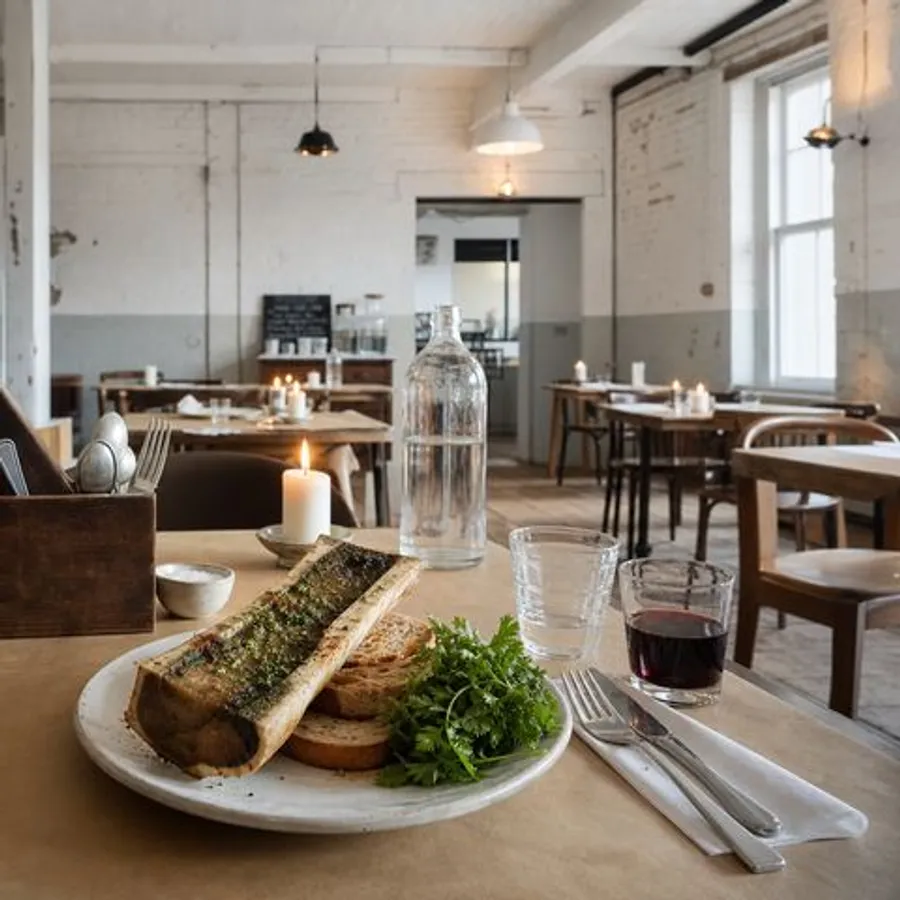
White walls, high ceilings, wooden floors, one black metal coat stand, paper tablecloths. Nothing here has been softened or warmed up for comfort’s sake — the room is almost clinical in its plainness, which suits a kitchen that has never needed a decorative flourish to make its point.
The building’s former life as a smokehouse for the neighbouring bacon factory is still legible in the bones of the space — high, whitewashed walls built originally for function rather than atmosphere — and Fergus Henderson’s decision to leave that industrial plainness essentially untouched, rather than warming it up with the kind of rustic-British styling a lesser restaurant might have reached for, is as radical a statement as anything on the menu.
It’s a room that trusts the food entirely, offering nothing in the way of visual distraction to soften a first-time visitor’s encounter with a plate of bone marrow.
What to Order
Roast bone marrow with parsley salad, Welsh rarebit, an Old Spot pork chop, Eccles cake with Lancashire cheese. The bone marrow in particular is the dish most closely associated with the restaurant’s entire philosophy, and ordering anything else first rather misses the point of a first visit.
The Old Spot pork chop is the more conventional main for a table that wants something heartier after the marrow, cooked simply enough that the quality of the breed and the rearing does the actual work. Eccles cake with Lancashire cheese, an old-fashioned pudding-and-cheese pairing that most modern British menus have quietly dropped, closes the meal exactly as it always has here.
A daily specials board supplements the core menu and is worth checking before ordering — the kitchen’s most seasonal, least-planned dishes often turn up there rather than on the fixed printed card.
The Drinks List
Thoughtful, mostly French, with a standing column of St. John’s own-label wines from small producers. The sherry selection is one of the best in London, and worth asking about specifically rather than defaulting to the more familiar reds and whites further down the list.
What You Will Pay
Around £85 per person for three courses with wine and service included, a fair number given the quality and provenance of what’s actually arriving at the table.
The Verdict
Book a long lunch and don’t leave without the Eccles cake — treating this as a quick weeknight dinner rather than a proper sitting rather undersells what the kitchen is actually capable of.
What’s Being Said
A menu that made offal fashionable in London and never once tried to make it fashionable-looking — the plate is exactly what it says it is. Three decades on, that plainness is still the entire point, and the countless restaurants that have since copied pieces of the format rarely manage the same honesty.
Nose-to-tail cooking is now a familiar phrase on menus across the city, invoked almost as a marketing shorthand for a certain kind of unfussy British confidence, but the restaurant that coined the practice has never needed to lean on the phrase itself.
The bone marrow arrives exactly as it did in 1994 — no reduction, no garnish beyond the parsley salad, nothing added to make it look more considered than it is — and that refusal to update the presentation, even as the rest of London’s dining scene has cycled through several design trends since, is precisely why it still reads as radical rather than dated.
On the menu
Full menu onlineClara Whitfield
Clara Whitfield has covered restaurants, neighbourhoods, and tasting menus for Vivi for over a decade, contributing reviews and features to regional and national food publications.
Questions worth asking before you book
Do I need to book at St. John?
What does St. John cost per person?
What is St. John best known for?
What are St. John's opening hours?
What cuisine does St. John serve?
Also in Smithfield