
Neighbourhoods
Notting Hill restaurants — where to eat in Notting Hill, from Portobello brunch to dinner rooms
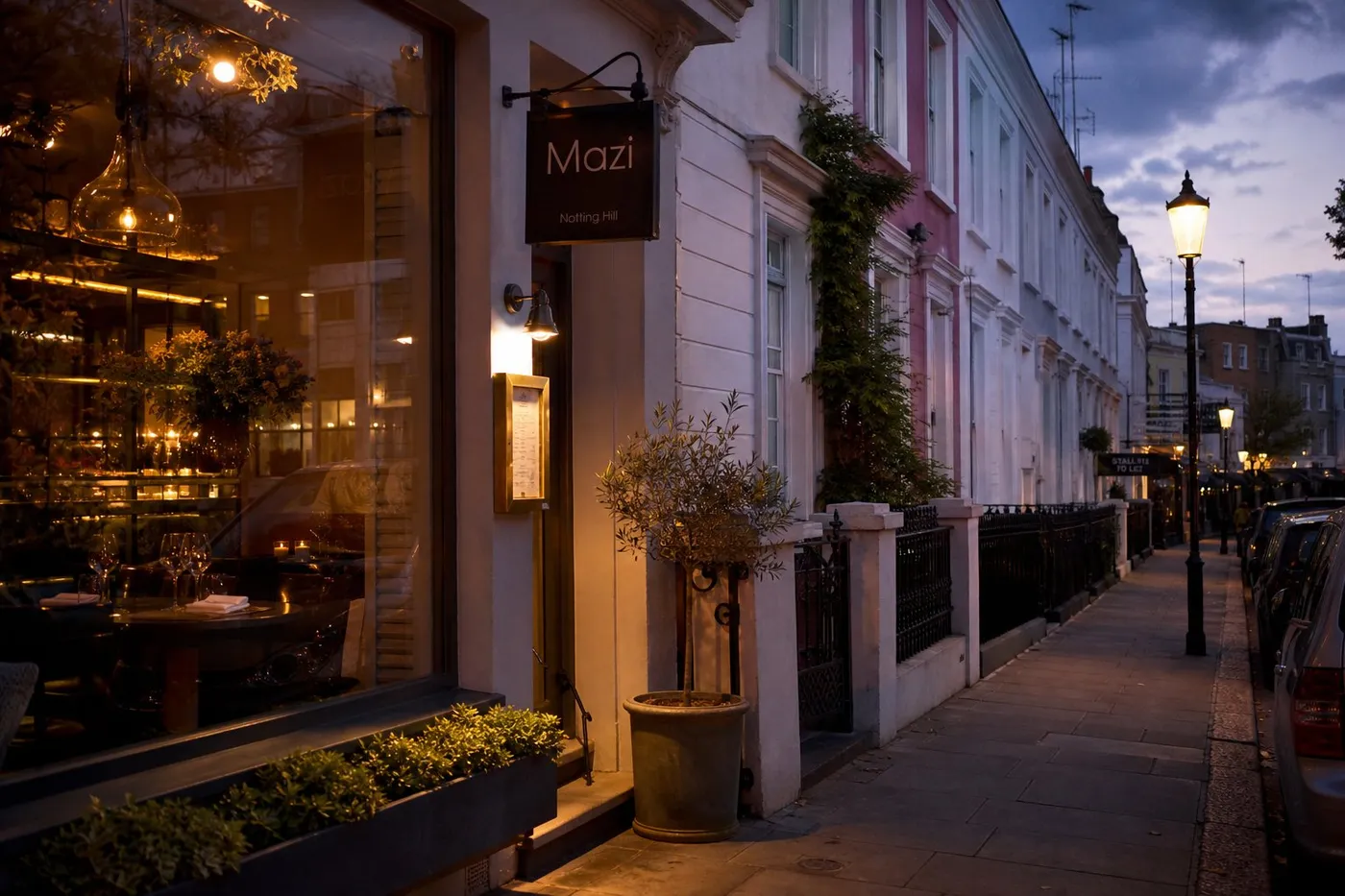
Notting Hill's dining leans residential — the Notting Hill restaurants worth knowing are brunch spots and neighbourhood rooms built for the streets around Portobello rather than for a citywide audience.
What Notting Hill is for
A relaxed weekend brunch or dinner among the pastel terraces — this is a neighbourhood built for a slow Saturday rather than a rushed weeknight booking. Most Notting Hill restaurants keep to that pace on purpose.
Portobello and the market rhythm
Portobello Road’s market is Notting Hill’s real anchor, running the length of the street with a heavier antiques focus on Saturdays and a more general market feel through the rest of the week. The neighbourhood’s dining scene has grown up around that rhythm — brunch spots that fill up as the Saturday market crowd arrives, quieter weekday lunches once the stalls pack up, and a genuinely residential evening scene once the day-trippers head home.
Beyond the film cliché
Notting Hill’s reputation outside London still owes a lot to the 1999 film of the same name, but the actual neighbourhood is considerably less quaint-cottage and more a mix of grand stucco-fronted townhouses (the wealthiest streets near Holland Park) and more modestly-scaled terraced streets further toward Golborne Road at the neighbourhood’s northern edge.
That end of the neighbourhood has its own distinct, less polished character and a strong Portuguese and North African food history, worth knowing about if the postcard version of Notting Hill isn’t what you’re after.
Getting here
Notting Hill Gate (Central, Circle, District lines) sits at the neighbourhood’s southern edge, while Ladbroke Grove further north is closer to the Portobello Road market and Golborne Road. Westbourne Park is another option for the northern end of the neighbourhood.
What it costs
Central Notting Hill’s brunch spots and restaurants price toward the area’s wealthier residential character, while Golborne Road at the northern end offers considerably more affordable options within the same general neighbourhood — worth knowing if budget matters as much as the postcode.
From slum to postcode premium
It’s easy to forget, given the neighbourhood’s current reputation, that large parts of Notting Hill were genuinely poor and run-down through much of the 20th century — the area around Rachman-era slum landlords in the 1950s and 60s, and later the site of some of London’s worst race riots in 1958, before a long process of gentrification from the 1980s onward turned it into one of the city’s most expensive residential postcodes.
That history is part of why the Notting Hill Carnival exists in the first place, born directly out of the local Caribbean community’s response to the hostility of that period.
When to visit
Saturday is Portobello Road at its fullest, market stalls and restaurant queues both — genuinely lively, but not the day for a quiet, unhurried visit. A weekday morning or a Sunday afternoon, once the antiques stalls have packed up, gives a considerably calmer read on the neighbourhood’s actual residential character.
Notting Hill Carnival
Once a year, in late August, Notting Hill hosts Europe’s largest street carnival — a celebration of Caribbean culture that’s run since the 1960s and now draws over a million visitors across its two days. It transforms the neighbourhood’s usual rhythm completely: main roads close, sound systems and costumed parades take over the streets, and most restaurants either run a completely different, much busier kind of service or close entirely for the weekend.
Worth knowing about whether the plan is to be there specifically for it or to avoid the crowds entirely.
Frequently asked questions
What day is best for visiting Portobello Road market?
Saturday is the market’s biggest day, particularly for the antiques stalls at the Notting Hill Gate end — expect real crowds. The market runs on other days too, with a more general, considerably quieter feel.
Is Notting Hill good for brunch specifically?
Very much so — it’s one of London’s more established brunch neighbourhoods, and weekend queues at the best-known spots are a genuine local institution rather than a recent trend. Arrive early on a Saturday or Sunday if a specific place matters to you.
What's the difference between Notting Hill proper and Golborne Road?
Golborne Road, at the northern end of Portobello Road, has a more working-class, multicultural history and a strong Portuguese and North African food scene — genuinely different in character from the grander stucco-terraced streets closer to Notting Hill Gate, even though they’re only a 15-minute walk apart.
Is Notting Hill expensive compared to the rest of London?
Central Notting Hill is genuinely one of London’s pricier residential areas, which shows up in restaurant prices too — though Golborne Road and the market’s food stalls offer considerably more affordable options within the same general neighbourhood.
Where to eat
5 restaurants-

The Ledbury
Brett Graham's three-Michelin-star kitchen, unusual for using deer, cattle and pigs reared on the chef's own farm.
Modern British / French-influenced -

Books for Cooks
A cookbook shop with a working test kitchen and a handful of communal tables — a genuine Notting Hill original since the 1980s.
Daily-changing café menu -

Casa Cruz
A glamorous, low-lit Argentine steak room that's become a discreet neighbourhood favourite without losing focus on the cooking.
Argentine / South American -

Granger & Co, Notting Hill
Bill Granger's original London outpost — still one of the defining Notting Hill weekend-queue brunch spots.
Australian-influenced all-day dining -

Ottolenghi, Notting Hill
The 2002 original that launched the entire Ottolenghi brand — still a genuine counter-service deli, not a polished later branch.
Middle Eastern / Mediterranean deli