
The File
Afternoon Tea The best afternoon tea London serves — classic and affordable rooms, plus the themed afternoon tea London books out fastest
Afternoon tea in London splits into two categories: rooms doing it because it's expected of a grand hotel, and rooms doing it because the kitchen actually wants to. The good ones are honest about which they are, and the sandwiches are worth the price of admission before a single scone arrives.
This is the practical version of the guide — what's actually on the stand, what it costs at each tier of room, how far ahead to book, and which of the theatrical, themed rooms are worth the premium over a straightforward one.
What a proper afternoon tea actually includes
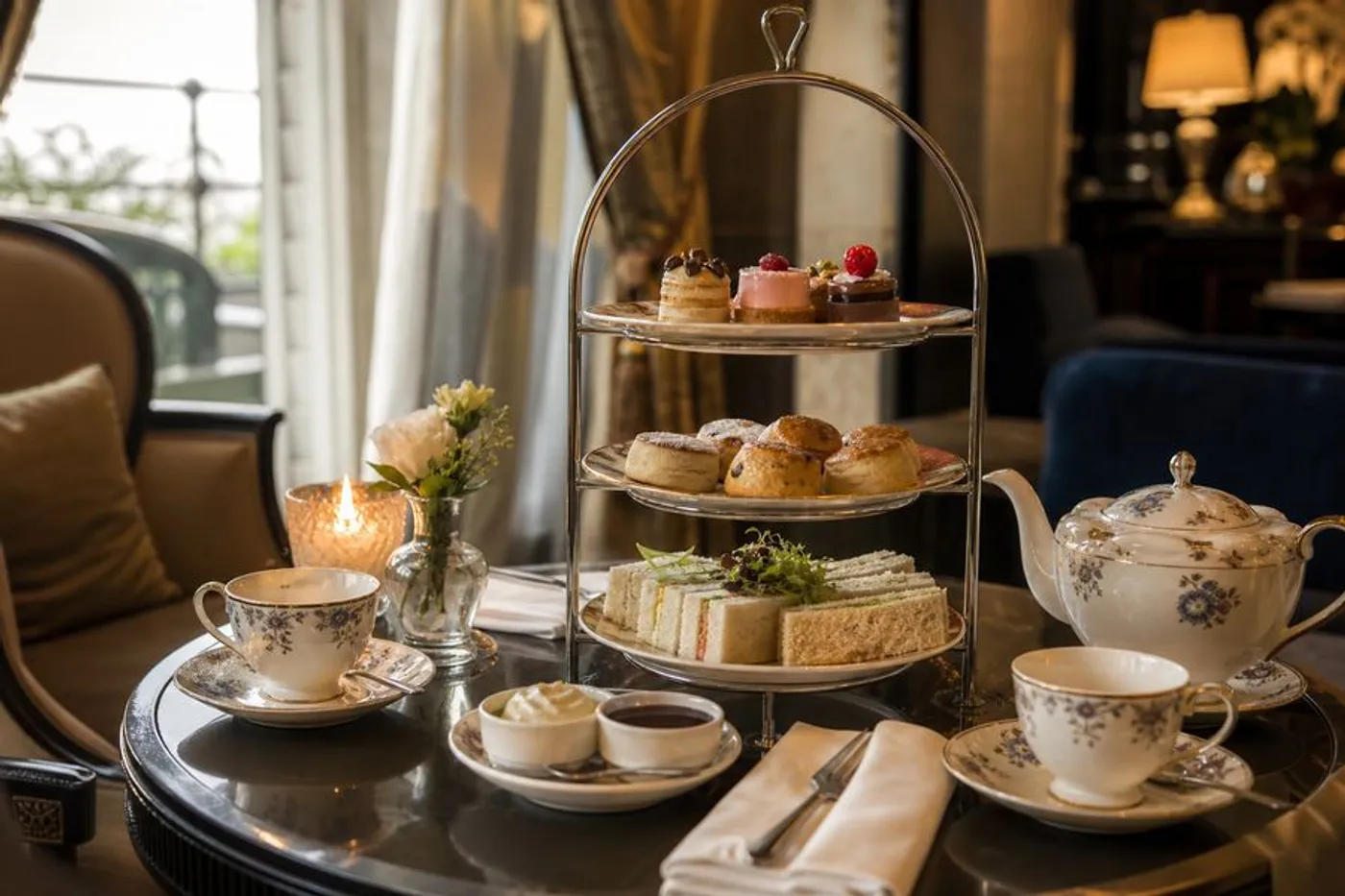
The format is fixed and has been for well over a century: three tiers on a single stand, savoury at the bottom, scones in the middle, pastries on top. The savoury tier is finger sandwiches — cucumber, egg mayonnaise, smoked salmon, coronation chicken are the standard rotation, crusts off, cut small enough to eat in two bites.
The middle tier is plain and fruit scones, served warm if the kitchen is doing it properly, with clotted cream and jam on the side (cream first, then jam, if you want to have the debate correctly rather than the other way round). The top tier is where a kitchen shows what it can actually do — a run of small, precise pâtisserie rather than a single big cake sliced into wedges.
Tea itself is not an afterthought at a room doing this right. Expect a proper list — not just builder's and Earl Grey but single-estate options, a decent green tea selection, and a genuinely brewed pot rather than a bag dropped in hot water at the table.
Fortnum & Mason, unsurprisingly given its own history as a tea merchant, runs one of the deepest tea lists of any room in the city — reportedly over 200 varieties at its Diamond Jubilee Tea Salon — and it's worth asking your server for a recommendation rather than defaulting to whatever's most familiar.
Affordable afternoon tea London prices — classic vs Champagne, tier by tier
Three rough price bands cover almost every room in London. All-day cafés and brasseries that serve tea as one of several daily services, like The Wolseley, sit around £45 per person — genuinely affordable afternoon tea London standards rarely beat, without the theatre of a dedicated grand-hotel tea room. The mid-tier — hotel lounges and department-store tea rooms doing tea as a proper standalone occasion — runs roughly £55–£65.
The top tier, the best-known grand-hotel rooms, sits at £95 per person before any Champagne supplement: The Ritz's Palm Court in St James's and Claridge's Foyer & Reading Room in Mayfair both sit at that price, and Fortnum & Mason's Diamond Jubilee Tea Salon prices a pot of Fortnum's own tea into the same band.
Champagne tea adds a glass, sometimes a full bottle between two, of Champagne or good English sparkling wine, typically for a £15–£25 supplement over the classic price. A few rooms fold the Champagne into one higher headline price instead of listing it as an optional add-on, so check exactly what's included before assuming the higher number is simply a pricier version of the same stand.
If Champagne isn't the point of the visit, classic tea gets you the identical food at every room in this guide — and the affordable afternoon tea London conversation is really about the classic stand anyway.
How to book the best afternoon tea London offers
Booking two to three weeks ahead is the realistic minimum for any well-known room on a weekend — the best afternoon tea London rooms fill fastest of all. The Ritz and Claridge's both release booking windows well in advance and the popular Saturday and Sunday sittings go quickly — if a specific date matters, book the day the window opens rather than the week before. Weekday sittings are considerably easier to secure with less notice, and a lunchtime-adjacent slot (early afternoon rather than the traditional 15:00–17:00 core) is usually the last availability to sell out.
All-day rooms with a wider covers count, such as The Wolseley, are the exception — same-day tea availability on a quiet weekday is genuinely possible there in a way it almost never is at a dedicated grand-hotel tea room. That flexibility is part of what makes it the sensible middle option rather than a compromise.
The themed afternoon tea London does best
A themed stand builds the food and crockery around a specific concept rather than the traditional format — a book, a film, a character, a season — and the themed afternoon tea London is best known for has a genuine specialist behind it.
The Sanderson Hotel's Mad Hatter's Tea in Fitzrovia is styled directly after the tea party in Alice in Wonderland, with deliberately mismatched, oversized crockery and a menu built around the book's imagery rather than a conventional stand. It's the closest thing London has to a permanent themed fixture, rather than a limited run.
Other themed teas rotate rather than staying fixed. Fortnum & Mason has run character tie-in stands tied to specific anniversaries — a Winnie-the-Pooh-themed tea marked the character's centenary — that were only available for a set window rather than indefinitely. If a specific theme is the reason for the visit rather than the room itself, confirm directly with the venue that it's currently running before booking around it; the themed afternoon tea London market is the part of this scene that changes fastest.
Dietary requirements and allergies
Every established afternoon tea room in this guide will accommodate vegetarian, vegan, gluten-free, and most common allergen requests — but they need advance notice, ideally at the point of booking rather than announced on arrival. A kitchen building a fixed three-tier stand for a fully booked room cannot improvise a substitute the way an à la carte kitchen can mid-service, so flag any requirement clearly when you reserve, and confirm it again if you book more than a couple of weeks out.
Afternoon tea with kids
Most grand-hotel rooms allow children, and the kids afternoon tea London hotels increasingly offer is a dedicated children's stand rather than a scaled-down adult one — typically simpler sandwiches, smaller portions, and less rich pâtisserie. A themed room works particularly well for a family visit for the obvious reason that the format is already playful rather than formal: the Sanderson's Mad Hatter's Tea in particular reads as a genuine outing for a child.
If a kids afternoon tea London visit is the specific plan, confirm the children's stand exists when booking — several rooms only publish the adult menu, and the children's version is bookable by request rather than listed.
Afternoon tea as a gift
A voucher for afternoon tea is one of the most common gift purchases at every room in this guide, and the better-known venues sell them directly through their own websites rather than through a third-party voucher marketplace — buying direct is worth doing where possible, since it avoids the markup and the booking-availability friction that third-party resellers sometimes add.
Vouchers are typically valid for six to twelve months and cover the tea itself rather than any Champagne supplement, which the recipient pays separately when they book their sitting.
Worth checking before buying one as a gift: whether the voucher is tied to a specific date-range booking window that might have already tightened by the time the recipient tries to use it, and whether it covers one person or two. A voucher bought for a couple in November for a well-known room can easily run into the same December booking squeeze described below, so buying early and encouraging the recipient to book their sitting promptly avoids the gift sitting unused for months.
Christmas and seasonal afternoon tea
Most well-known rooms run a seasonal stand from late November through the Christmas period — richer, more spiced flavours through the pastry tier, sometimes a modest price increase over the standard menu — and the Christmas afternoon tea London books each year sells out considerably earlier than the rest of the calendar.
If a Christmas afternoon tea London booking is the plan, book in October rather than waiting until November; by the time the seasonal menu is publicly announced, the best weekend slots at the most established rooms are often already gone.
What to avoid
Pre-made sandwiches that have been sitting under cling film, and any stand where the bottom tier is an afterthought — if the savoury course isn't taken seriously, the rest of the stand usually isn't either. Afternoon tea in London is priced as an occasion, so a room cutting corners on the savoury tier is charging occasion prices for café output.
The weakest value in this market sits with tourist-facing venues charging grand-hotel prices without a grand-hotel room, kitchen, or tea list behind them; a genuinely good £45 tea at an honest all-day room beats a mediocre £70 one every time, and the best afternoon tea London serves is not always the most expensive one.
And if it's a more relaxed, boozy weekend register you're after rather than a formal sit-down occasion, our bottomless brunch guide covers the other end of that spectrum.
Where to go
All reviews-

The Wolseley
The all-day Corbin and King brasserie on Piccadilly is still the most London-ly lunch in London. Breakfast, tea, dinner.
Mayfair -

The Ritz
Gilded ceilings, panelled mirrors and a live pianist — the Palm Court is the afternoon tea every other London room is measured against.
St James's -

Claridge's
Sweeping Art Deco arches and marble floors make the Foyer & Reading Room the more architecturally confident of Mayfair's grand teas.
Mayfair