
The File
London's Michelin-Starred Restaurants
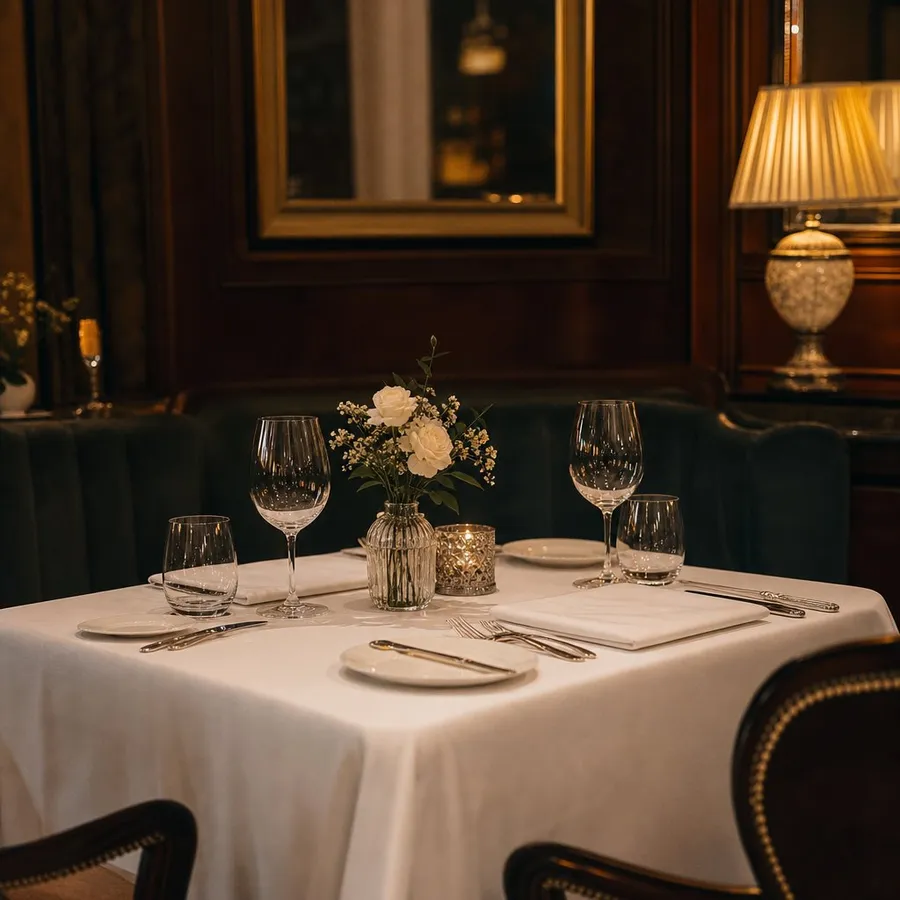
London currently carries more Michelin stars than any city outside Tokyo and Paris, and the list moves every year — restaurants close, chefs leave to open somewhere new, and a kitchen that held a star for a decade can lose it without much warning (Lyle’s, one of the more written-about one-star rooms of the last ten years, shut for good in 2025).
Anything published as a “definitive” Michelin list is really a snapshot. This one is current as of the latest Guide, organised by tier, and where a restaurant already has a full review on this site, it’s linked rather than re-described.
The three tiers mean something specific in Michelin’s own language, and it’s worth keeping in mind while reading a list like this one: one star is “high quality cooking, worth a stop”; two stars is “excellent cooking, worth a detour”; three stars is “exceptional cuisine, worth a special journey.” That last phrase is doing real work — a three-star rating is explicitly a claim that the restaurant justifies travelling to London specifically to eat there, not just booking a table while you happen to be in town.
It’s also worth knowing that inspectors rate the cooking, not the room, the service, or the price — which is why a handful of the restaurants below are considerably less formal than their star count might suggest.
Three Stars
Six restaurants in London currently hold the Guide’s top rating, and none were promoted or demoted this cycle.
The Ledbury, Brett Graham’s Notting Hill dining room, is the only one of the six with a review on this site — see the full write-up for the room, the tasting menu, and what it costs to eat there properly.
Restaurant Gordon Ramsay (Chelsea) is the longest continuously three-starred kitchen in the country, running a classical French tasting menu on Royal Hospital Road since long before “Gordon Ramsay” became a television brand rather than a chef’s name on a door.
Core by Clare Smyth (Notting Hill) runs a British tasting menu built around single, precisely sourced ingredients — potato and roe is the dish most written about — and Smyth remains the only British woman to hold three stars.
Alain Ducasse at The Dorchester (Mayfair) is the London outpost of the French chef’s global fine-dining group, set inside the hotel itself, and it plays a straighter, more formal hand than most of the others on this list.
Hélène Darroze at The Connaught (Mayfair) folds Darroze’s south-western French roots into a tasting menu that leans harder on game and offal than the Mayfair address might suggest.
Sketch (The Lecture Room & Library) (Mayfair) is the most theatrical of the six — the building is better known to some diners for its design flourishes than its food — but the kitchen behind the tasting menu is doing genuinely serious work, not just staging a room.
Two Stars
London holds around fifteen two-star restaurants at the last count — a wider tier than the six three-star rooms, and, as with the one-star list below, this is a selection rather than the complete roster.
The Clove Club, set inside the old Shoreditch Town Hall, is the other on-site review in this guide — Isaac McHale’s seasonal tasting menu is covered in full there.
Ikoyi (Strand) remains the most distinctive two-star kitchen in London — West African-rooted cooking built around spice blends developed in-house, rather than a European tasting-menu format with a few borrowed ingredients bolted on.
A. Wong (Pimlico) covers Chinese regional cooking with a depth most London Chinese restaurants don’t attempt, from a dim sum service that’s genuinely worth booking on its own to a tasting menu that ranges much further across the country’s regional cuisines.
Gymkhana (Mayfair) plays colonial-era Indian club dining as a format rather than a joke — game, tandoor work, and a wine list built to match rather than just tolerate the spice.
Trivet (Southwark) is the least starry-feeling room on this list — a modern British kitchen from two ex-Clove-Club chefs, in Bermondsey Street’s shadow rather than Mayfair’s, that earned its second star on cooking rather than address.
One Star
This is by far the largest tier — over sixty restaurants at the last count — so this is a selection rather than the full list, weighted toward the kitchens genuinely worth crossing London for.
St. John has held its star since 2009 and remains the most influential restaurant on this entire list in terms of how other London kitchens now cook — the full review is on this site.
Pied à Terre, also reviewed here, is the capital’s longest continuously starred restaurant, running since 1991.
The River Café earns its star on Italian cooking built entirely around ingredient quality rather than technique for its own sake — see the full review for the room and the wood oven.
Chishuru, Adejoké Bakare’s Fitzrovia dining room, and Brat, Tomos Parry’s Redchurch Street grill, are both reviewed in full elsewhere on this site — two of the more talked-about one-star kitchens of the last few years, for very different reasons.
Chishuru for West African fine dining done with genuine formal ambition, Brat for turning a whole grilled turbot into a destination dish.
The Ninth, Jun Tanaka’s Charlotte Street room, rounds out this site’s one-star reviews — French-Mediterranean small plates rather than a single tasting menu.
Beyond this site’s own reviews, Angler (Moorgate, seafood from the top floor of the South Place Hotel) and Trinity (Clapham, proof a one-star kitchen can work south of the river without a hotel behind it) are two of the more consistently well-regarded rooms outside the reviews above.
Akoko (Fitzrovia, West African tasting menu) sits a short walk from Chishuru and makes a useful comparison of two different approaches to the same broad cuisine at the same tier. Luca (Clerkenwell, Italian, from the Clove Club team — reviewed on this site) and Portland (Fitzrovia, modern British) round out a reasonable one-star shortlist for anyone working through this tier systematically rather than restaurant by restaurant.
Where the stars actually cluster
Mayfair holds a disproportionate share of the three-star tier specifically — four of the six three-star rooms — which says more about a century of hotel-dining money concentrating in W1 than about any real geographic advantage for cooking.
Fitzrovia is the other cluster worth knowing about, and mostly at the one-star level: Pied à Terre, Chishuru, The Ninth, Akoko and Portland (plus the two-starred Kitchen Table) are all within about ten minutes’ walk of each other, which makes the neighbourhood a genuinely efficient one to plan a multi-meal trip around rather than crossing London between bookings.
Shoreditch has quietly become a third cluster, anchored by The Clove Club and Brat, in a part of London that had no Michelin presence at all twenty years ago.
Booking one of these
The three-star rooms need booking weeks to months ahead, especially for a weekend table; the one-star tier is generally more forgiving, and several — The River Café among them — take a reasonable number of walk-ins outside peak service.
None of this is a substitute for checking each restaurant’s own booking page before planning around it — allocations, release dates, and which nights are walk-in-only all change without much notice, and a list like this one is a starting point for research, not the last word on availability.
Frequently asked questions
How often does the Michelin Guide update its London list?
Once a year, typically in the autumn — the Guide adds and removes stars, and occasionally restaurants close or change hands between announcements, which is exactly why a list like this one needs re-checking against the current Guide rather than trusted indefinitely.
What's the actual difference between one, two, and three Michelin stars?
Michelin’s own framing: one star means “high-quality cooking, worth a stop”; two stars means “excellent cooking, worth a detour”; three stars means “exceptional cuisine, worth a special journey.” In practice this maps roughly onto ambition and consistency — three-star kitchens are expected to deliver at the highest level on every single visit, not just their best night.
Is a Michelin star the same as a Michelin Bib Gourmand?
No — a Bib Gourmand recognises good food at a more modest price point and sits entirely outside the star system. Some restaurants on this site (The Marksman, for one) hold a Bib Gourmand rather than a star, which is a genuine distinction rather than a lesser version of the same award.
Can a restaurant lose its Michelin star?
Yes, and it happens most years somewhere in London — a change of head chef, a decline in consistency, or simply the restaurant closing are the most common reasons. It’s part of why this guide notes Lyle’s closure explicitly rather than quietly dropping it from an earlier list.
Do Michelin-starred restaurants in London always require a jacket or formal dress?
No — dress codes vary considerably by restaurant and have relaxed across the board over the past decade. Smart-casual covers most rooms on this list comfortably; it’s worth checking the specific restaurant’s own guidance if in doubt, rather than assuming a hard rule applies everywhere.