Hammersmith · Italian
The River Cafe
The River Cafe opened in 1987 as a staff canteen for the Richard Rogers architectural practice. It has been, uninterruptedly, one of the most important restaurants in London ever since. Ruth Rogers, alongside the late Rose Gray, effectively rewrote how London thought about Italian cooking from this one kitchen — simple, produce-led, unapologetically seasonal — and the generation of chefs who trained under them now runs a significant share of the city’s better kitchens.
The Room
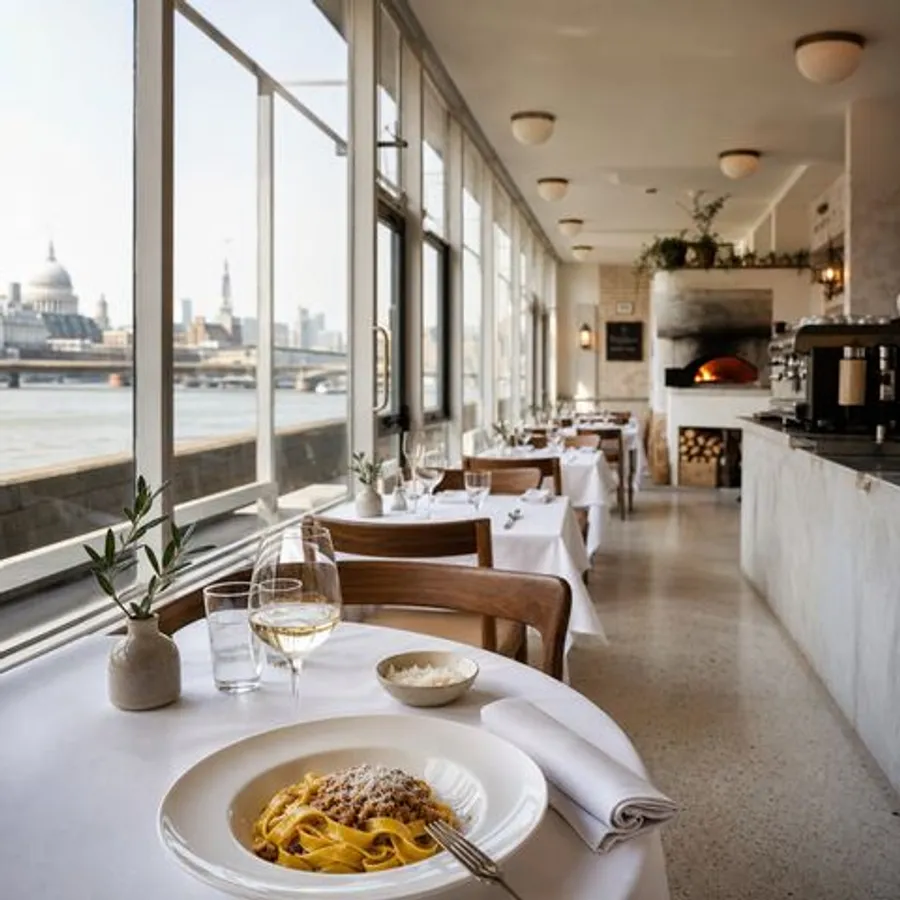
A long, low, bright white room, one wall of full-length windows onto the Thames, and a wood-fired oven at the far end. The view is doing genuine work here, not just decoration — tables by the window are the most requested for good reason, and the light off the water changes the whole character of the room across the day.
The building’s origins as a converted warehouse for the Richard Rogers architectural practice next door are still visible in the proportions of the space — long, low, and industrial in scale rather than designed from scratch as a restaurant — and the choice to leave that architectural DNA largely intact rather than dress it up says something about the restaurant’s whole philosophy.
Riverside restaurants in London are frequently better at the view than the food; this remains one of the rare exceptions where both are operating at the same serious level. Rainville Road itself is a genuinely unglamorous stretch of Hammersmith to find such a considered dining room on, which is part of the surprise the first-time visitor’s walk from the main road tends to produce.
What to Order
Whatever pasta is on the menu that day. The Dover sole, if it’s available. The chocolate nemesis pudding — the most famous pudding in British restaurant history, and still the best, dense and intense in a way that countless imitators across London have never quite matched.
The pasta, made fresh daily and changing with whatever’s genuinely in season, is the clearest expression of the kitchen’s whole philosophy — simple technique applied to exceptional ingredients, with nothing added purely for decoration. Grilled meat and fish mains from the wood-fired oven round out the menu, cooked with the same restraint as everything else on offer, and worth ordering specifically if the pasta course alone doesn’t feel like enough for a proper long lunch by the river.
The Drinks List
Italian, long, deep, honest, chosen with the same produce-first philosophy that defines the kitchen — nothing showy, everything considered. The by-the-glass selection changes regularly enough to reward a diner willing to ask the sommelier directly rather than defaulting to a familiar regional name off the printed list.
The cookbooks that grew out of this kitchen — several of them genuine bestsellers that shaped how a whole generation of home cooks in Britain thought about Italian food — are sold quietly by the entrance rather than pushed on departing diners, a low-key detail that says something about how the restaurant prefers its influence to be discovered rather than advertised.
What You Will Pay
Lunch for two with a shared starter, pasta each, a main to share, pudding, and a bottle: £250–£300, a serious commitment that reflects both the ingredients and the restaurant’s standing rather than the surroundings alone.
The Verdict
Book six weeks ahead. Sit by the window. Order the nemesis. This is not a restaurant to visit on a whim, and the planning required is very much part of what makes the eventual meal feel like an occasion.
What’s Being Said
A staff canteen that quietly became one of the most influential Italian kitchens in Britain — the menu still changes daily, the way it always has, and that daily rewrite is the clearest sign the kitchen still cares as much about the produce as it did on its first day.
It would have been easy, decades into this level of reputation, to lock the menu into a set of reliable, repeatable “greatest hits” the way plenty of famous restaurants eventually do. The River Cafe has never taken that route, and the daily changeover means a regular booking six weeks apart genuinely doesn’t know what they’ll be eating until the menu arrives at the table.
That’s a rarer discipline than the restaurant’s fame might suggest, and it’s the reason the kitchen’s influence on London cooking has kept renewing itself across successive generations of chefs who trained there, rather than calcifying into a single fixed style. A 5-star rating this consistent, held across nearly four decades of reviews, is a rarer thing than the restaurant’s fame might suggest.
On the menu
Full menu onlineClara Whitfield
Clara Whitfield has covered restaurants, neighbourhoods, and tasting menus for Vivi for over a decade, contributing reviews and features to regional and national food publications.
Questions worth asking before you book
Do I need to book at The River Cafe?
What does The River Cafe cost per person?
What is The River Cafe best known for?
What are The River Cafe's opening hours?
What cuisine does The River Cafe serve?
Also in Hammersmith