Farringdon · British (chops, steaks)
The Quality Chop House
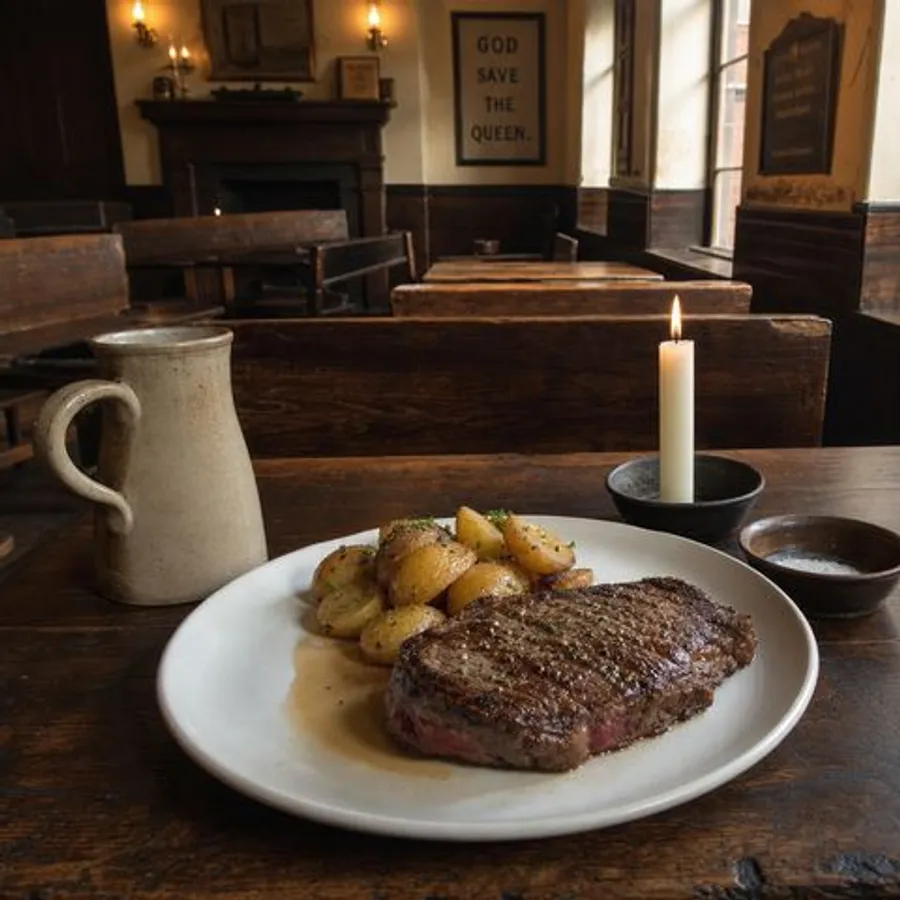
The Quality Chop House has kept its original 1869 wooden benches, which means the history here isn’t decor — you’re actually sitting in it. This is a restaurant that could easily have preserved the shell and modernised the inside, softened the seating, added padding, made an evening here more comfortable in the way most Victorian dining rooms eventually get renovated into being.
It hasn’t, and that refusal is part of the point: the room’s stated purpose, carved into the window since it was a genuine working-men’s chop house, was “civilised dining in an efficient manner,” and it still delivers on both halves of that promise.
The Room
A Grade II-listed Victorian dining hall, narrow booths and worn wood, genuinely unchanged in shape since it opened. The original benches are hard, upright, and close enough together that neighbouring tables are practically part of your own conversation — this is not a room designed for privacy, and pretending otherwise would miss what makes it worth visiting.
Etched glass, dark wood panelling, and the kind of patina that no design budget can replicate honestly, because it was earned rather than applied. Come expecting a slightly formal, slightly cramped evening, and the room delivers exactly that with total confidence. Farringdon Road outside has changed almost beyond recognition since 1869; stepping through this particular door hasn’t.
What to Order
The confit potatoes, fried in duck fat, are the dish this restaurant is now best known for — crisp-shelled, meltingly soft inside, and rich enough that ordering them as a side to anything feels like the correct decision rather than an indulgence. The Belted Galloway rib-eye is the kitchen’s serious answer to “proper steak,” sourced with the kind of specificity that shows up in the eating rather than just the menu description.
Barnsley chops are the more old-fashioned order, a genuine callback to the room’s working-class chop-house origins, and the mince on toast is worth trying at least once if you want the most unpretentious dish the kitchen still serves — a reminder that this was, and in spirit still is, a room built to feed people plainly and well.
The Drinks List
A serious, well-matched list built for red meat, with enough structure in the reds to stand up to duck fat and dry-aged beef without being outmuscled by either. It’s not an especially adventurous list, and it doesn’t need to be — the food here calls for something dependable in the glass, not a talking point.
What You Will Pay
Around £55–75 per person with wine, which for cooking and sourcing of this quality, in a room with this much genuine history attached, is a fair reflection of what you’re getting rather than a premium charged for the address. A lighter meal — a starter and the confit potatoes shared — comes in well under that; committing to the rib-eye and a proper bottle pushes toward the top of the range.
The Verdict
Order the confit potatoes regardless of what else you get — they’re the dish everyone remembers, and skipping them on the grounds of ordering a steak instead is a genuine mistake. Book ahead if you want a booth rather than a stool at the counter, and don’t expect a relaxed, sprawling evening; this room moves at its own brisk, century-old pace.
What’s Being Said
A dining room from 1869 that still runs on its original benches — and a kitchen good enough that nobody’s asking for new ones. Restaurants this old usually have to choose between authenticity and comfort at some point; The Quality Chop House has simply never been asked to make that trade, because the cooking has stayed good enough to make the hard benches worth sitting on.
Shaun Searley’s tenure in the kitchen has kept the menu grounded in the same working-class British tradition the room was built for, rather than using the history as a backdrop for something more fashionable — the confit potatoes and the mince on toast sit on the same menu without either feeling like the odd one out.
A 5-star rating for a room this uncomfortable to sit in might read as a contradiction; the cooking is exactly why it isn’t. This review’s verdict comes down to exactly that trade: a room built for function over comfort, and cooking good enough that the trade-off stops mattering after the first course.
On the menu
Full menu onlineNathaniel Ashford
Nathaniel Ashford is a former drinks-trade journalist covering cocktail bars, pubs, and neighbourhoods for Vivi, and leads the Vivi Neighbourhoods series.